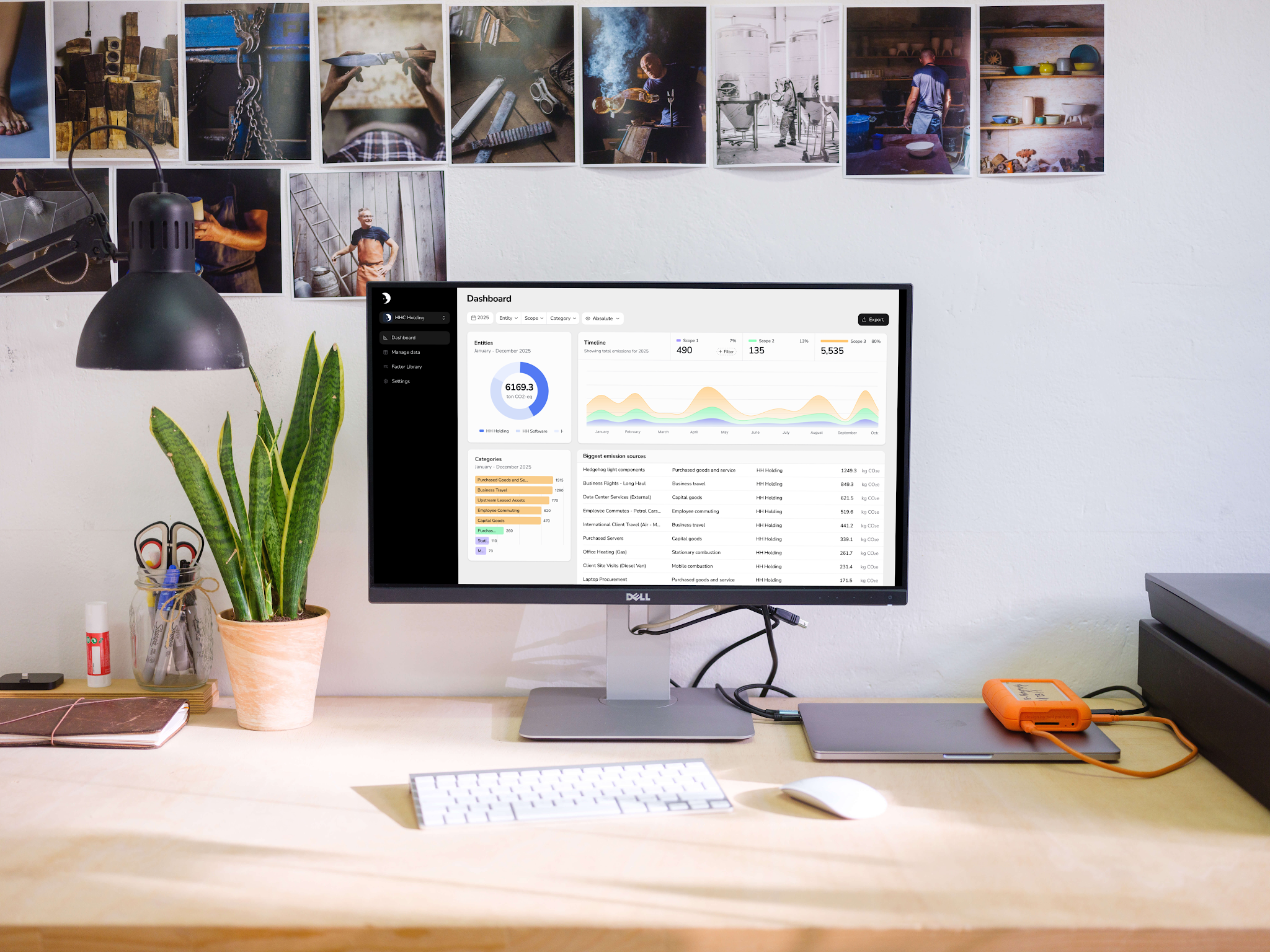

It is January. For many entrepreneurs and financial managers, this means a period of looking back, collecting receipts, and verifying. The annual accounts must be finalised. Perhaps you have spent the last few weeks with your accountant, or sat over spreadsheets until late in the evening to get the profit and loss account to balance. A weight falls off your shoulders once the signature has been set. The financial health of the company has been mapped out again. You know what came in, what went out, and what remains at the bottom line.
But in the current business climate, that financial annual report is no longer the only report that counts. There is a second balance sheet that is beginning to weigh increasingly heavily: your ‘carbon accounting’. Whereas in financial administration you look at euros, in carbon accounting you look at emissions. It is effectively an annual account, but for your sustainability figures. And just as you do not want to sail blindly on financial gut feelings, you can nowadays no longer afford to guess at your ecological impact.
What is carbon accounting actually?
Carbon accounting is the process whereby you measure, calculate, and report the total emission of greenhouse gases of your organisation. The result of this is your Carbon Footprint, or CO₂ footprint. A carbon footprint is a way to measure the total amount of greenhouse gases that are directly and indirectly emitted by an activity, or that have built up during the life cycle of a product. These emissions are usually expressed in equivalents of carbon dioxide (CO₂-eq). This means that we look not only at CO₂, but also at other gases that contribute to climate change, such as methane (CH4) and nitrous oxide (N2O), and convert these into one understandable standard measure.
The goal of carbon accounting is exactly the same as that of your financial bookkeeping: gaining insight. Without insight, you do not know where you are leaking, where you can work more efficiently, and where the opportunities lie.
To do this in a structured way, the emission is usually divided into three categories, or 'Scopes', according to the Greenhouse Gas Protocol, the global standard for emission reporting:
- Scope 1: These are the direct emissions that you cause yourself. Think of the gas consumption for heating your office or the diesel in your own company cars.
- Scope 2: These are indirect emissions through energy that you purchase. The most obvious is electricity. The emission takes place at the power station, but is the consequence of your usage.
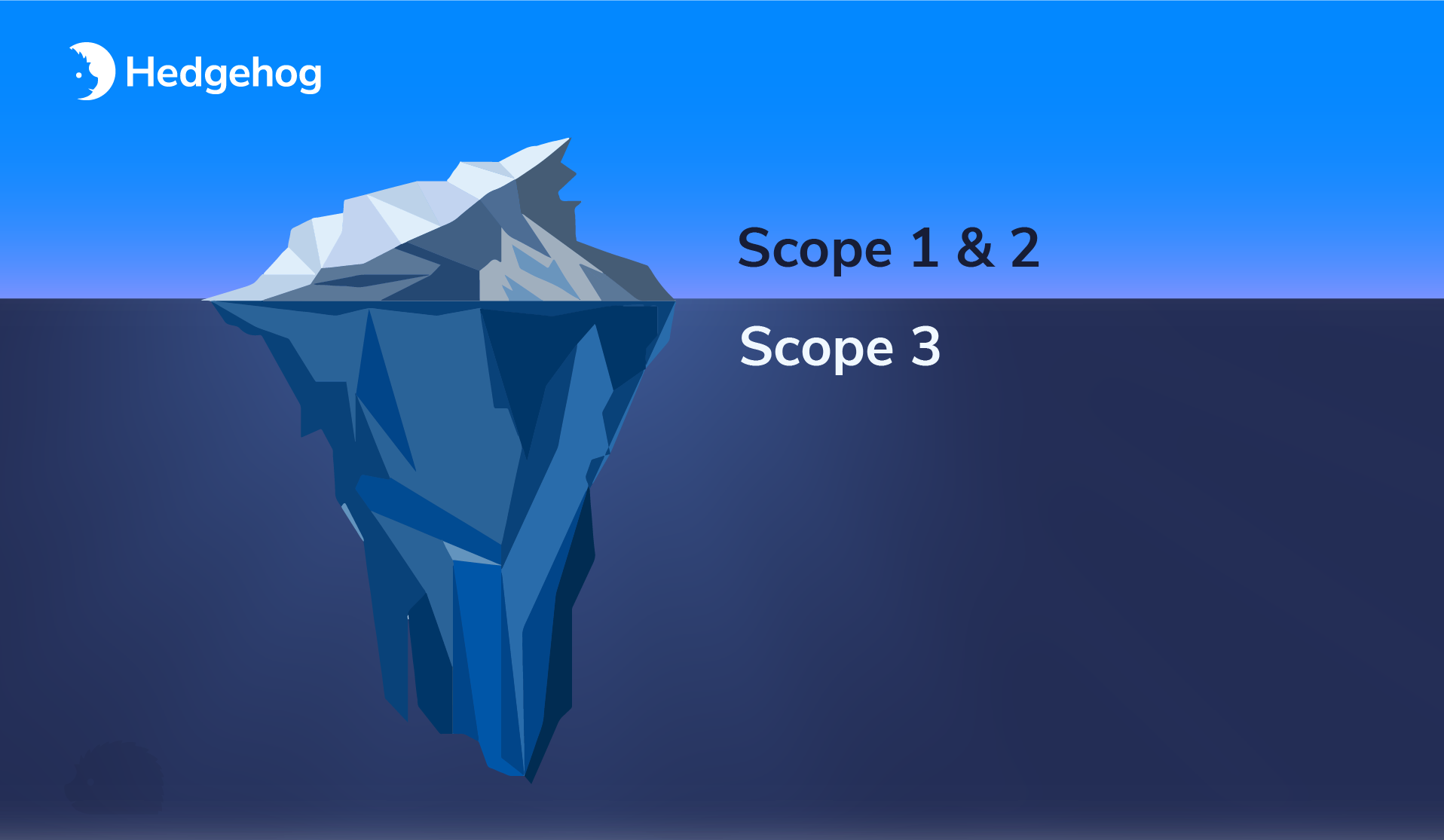
- Scope 3: Here it becomes interesting (and often complex). These are all other indirect emissions in your value chain. Think of the emission during the production of the raw materials you purchase, the transport by external parties, the commuting of employees, and even what happens to your product when the customer throws it away.
Did you know that for most companies the vast majority, sometimes even more than 90%, of their emission is located in that last category? Read more about scope 1, 2 and 3 in this detailed explanation.
Why is carbon accounting now more important than ever?
Perhaps you think: “Nice, but I am already busy enough with my ordinary bookkeeping.” That is understandable. Yet we see at Hedgehog that carbon accounting is quickly shifting from a ‘must-do’ to a strategic necessity. Here are five reasons why you want to start with this, this very day.
1. Insight into the carbon footprint of your company You cannot manage what you do not measure. As long as you have no data, sustainability remains a vague catch-all term. By mapping out your footprint, you suddenly see where the hotspots are. Perhaps that one logistics process turns out to be much more polluting than thought, or you see that the switch to LED lighting in the production hall has more impact than expected. Carbon accounting makes the abstract concrete.
2. A data-driven reduction strategy Good intentions are sympathetic, but in business you need strategy. With the figures from your carbon accounting, you can make substantiated choices. Instead of haphazardly placing solar panels somewhere, you can calculate which measure yields the most CO₂ reduction per euro invested. This makes sustainability not only better for the planet, but often also more efficient for your wallet. After all, efficiency often means: less waste of energy and materials.
3. Compliance with regulations (CSRD and SB 253) The European Corporate Sustainability Reporting Directive (CSRD) obliges more and more companies to report on their impact. Even if your SME company does not fall directly under this obligation, you will deal with it indirectly. Large customers who are CSRD-liable must namely map out their Scope 3 emissions – and those are your emissions. So they are going to ask for your data.
Additionally, we see international developments such as SB 253 in California. If you do business with large American parties, you can also be asked there to provide full disclosure. Voluntary labels such as B-Corp, Ecovadis and the Science-Based Targets initiative (SBTi) likewise require a solid accounting of your emissions.
4. Transparency towards your chain partners Customers, suppliers and investors are increasingly asking for transparency. They want to know who they are doing business with. By transparently sharing your sustainability goals and results, you build trust. You show that you are a future-proof partner who understands and manages risks. An investor sees a company that has a grip on its data as a safer investment.
5. Reliable communication There are three pitfalls in sustainability communication: greenwashing (pretending to be greener than you are), greenhushing (remaining silent for fear of criticism) and greenwishing (hoping you achieve goals without a plan). Carbon accounting is the antidote to all three. With hard data, you communicate reliably. You do not have to make anything look better than it is, because you have the facts. And if the figures are disappointing for once, you can explain why and what you are doing about it. That is often appreciated more by the market than a slick marketing story without substance.
How does Hedgehog help?
At Hedgehog, we understand that you do not have days of time to struggle through complex spreadsheets and scientific reports. You simply want to know where you stand and what you must do. Therefore, we believe in an approach that combines software with human expertise. We are not a distant auditor, but your partner in this process.
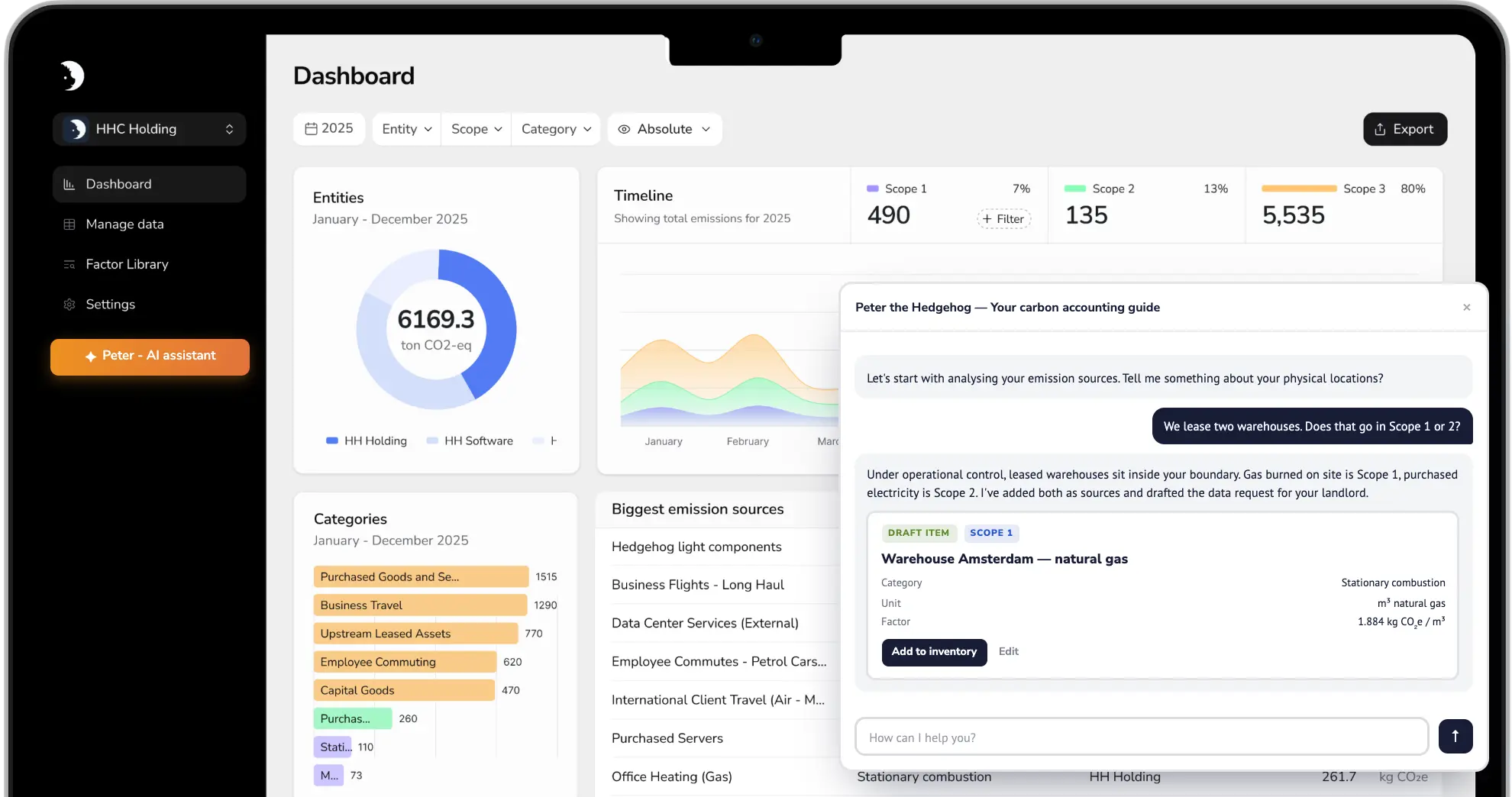
Hedgehog Carbon platform: Our solution starts with the Hedgehog Carbon platform. This is an intuitive SaaS tool that has been specially developed to help companies measure and manage their footprint efficiently. Forget the complicated Excel files that are no longer correct after three versions. The Carbon platform helps you to collect data from Scope 1, 2 and 3 in a structured manner. Whether it concerns gas bills, kilometres of the vehicle fleet or purchasing data; the system translates these data into clear CO₂ equivalents.
Because we work with validated databases, you know for sure that your reporting is correct and meets international standards such as the GHG Protocol. This way you are always ready for questions from customers or accountants.
From insight to action with our experts: Software is fantastic for collecting and calculating data, but the real value lies in what you do with that data. That is where our personal approach comes into play.
- Consulting & Analysis: Our experts look along with you. We help you interpret the figures. Do we see outliers? Where lie the "quick wins"? We offer in-depth analyses such as Life Cycle Assessments (LCA) for your products, so that you know exactly what the impact is from raw material to waste phase.
- Compliance Services: Are you struggling with the CSRD or do you want to commit to the Science-Based Targets (SBTi)? We pilot you through the forest of regulations. We ensure that your reports are 'audit-proof', without you drowning in bureaucracy.
- Reduction Strategy: Ultimately, the goal is not only to report, but also to reduce. Together we develop a strategy that fits your company. No vague vistas for 2050, but pragmatic steps that you can take tomorrow.
At Hedgehog, we believe that sustainability must be feasible for every entrepreneur. It does not have to be complicated or intimidating. Just as your financial annual account helps you to remain financially healthy, carbon accounting helps you to become future-proof.
So, now that those financial folders are back in the cupboard: shall we take a look at that other balance sheet? It is time to get a grip on your figures. Not only for the planet, but also for the future of your company.