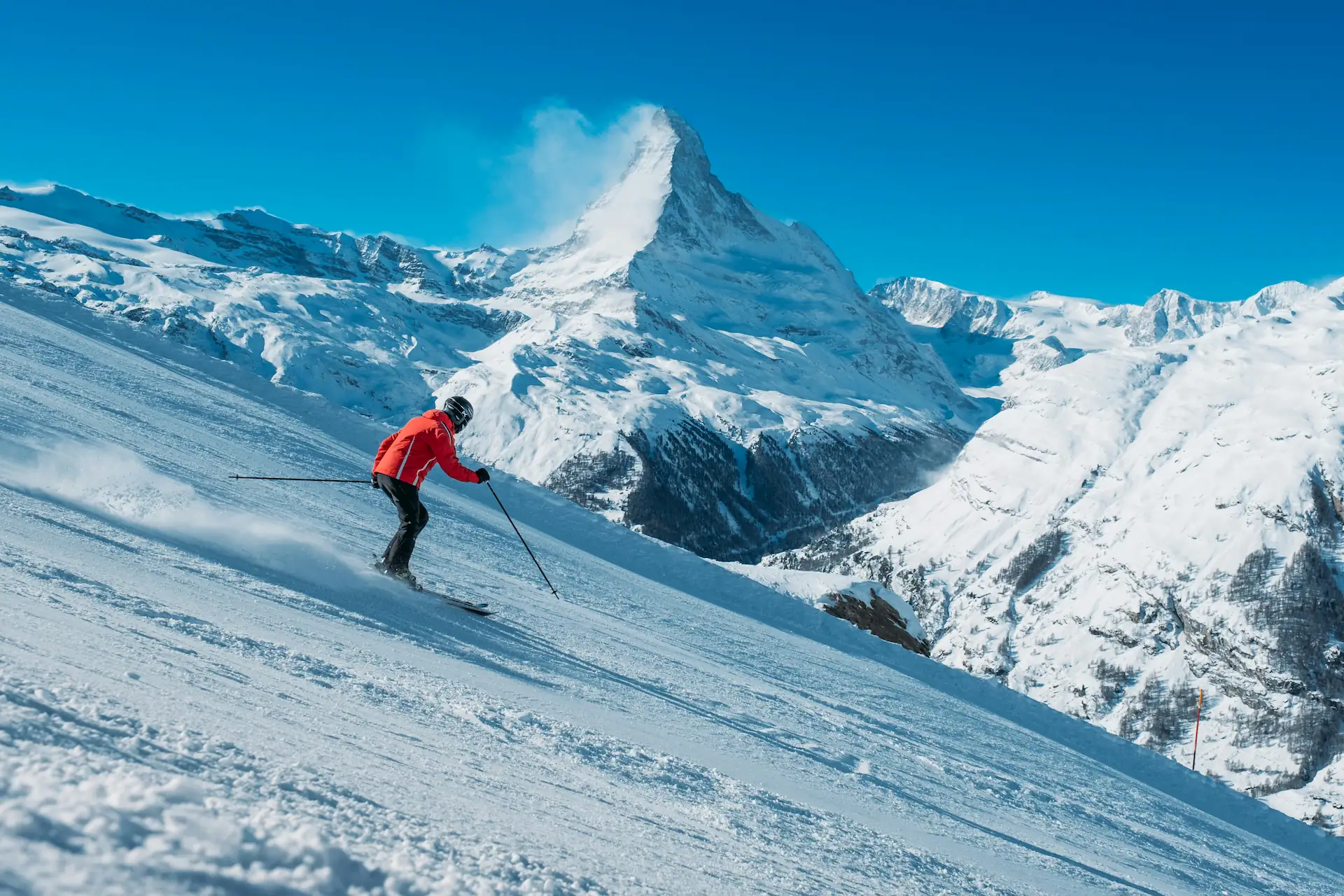
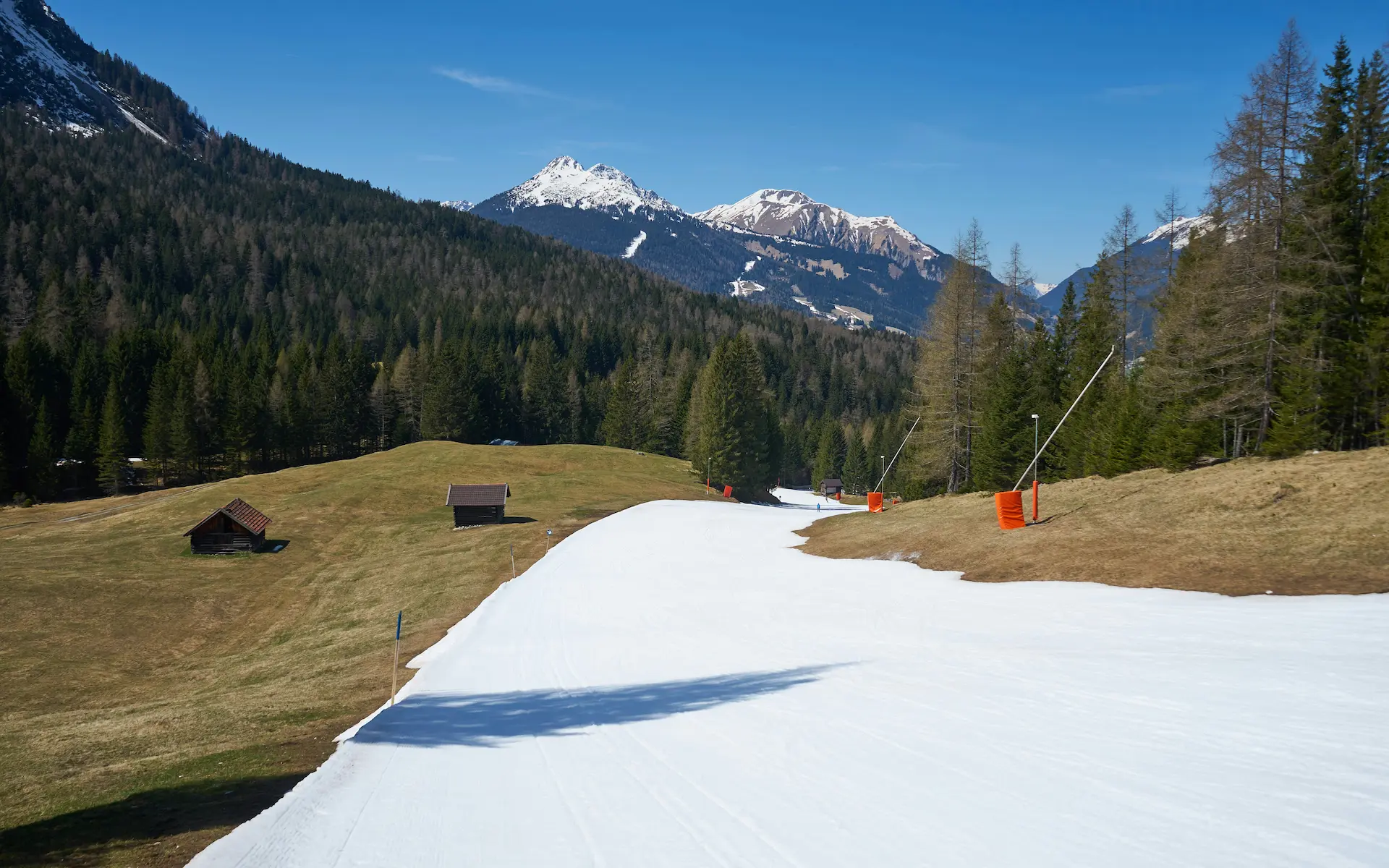
Nowadays a nice pack of snow in your winter holidays during not given anymore. With a 2°C temperature rise, over half of Europe’s ski slopes will no longer have reliable snow cover. At 4°C warming, 98% of ski areas will face the same issue. As a result, ski resorts have grown increasingly dependent on artificial snow to sustain tourism. Currently, 95% of Italian, 70% of Austrian, 65% of French, and 50% of Swiss resorts rely on snow making machines to keep their economies viable.
However, artificial snow carries a heavy ecological cost—it contributes to global warming while mountain regions, already warming twice as fast as lowlands, face melting glaciers, shifting precipitation, and disrupted water cycles. Though it offers a temporary fix, artificial snow also, to certain extent worsened the problem. Let´s explore the ecoligical impact of artificial snow.
What is artificial snow?
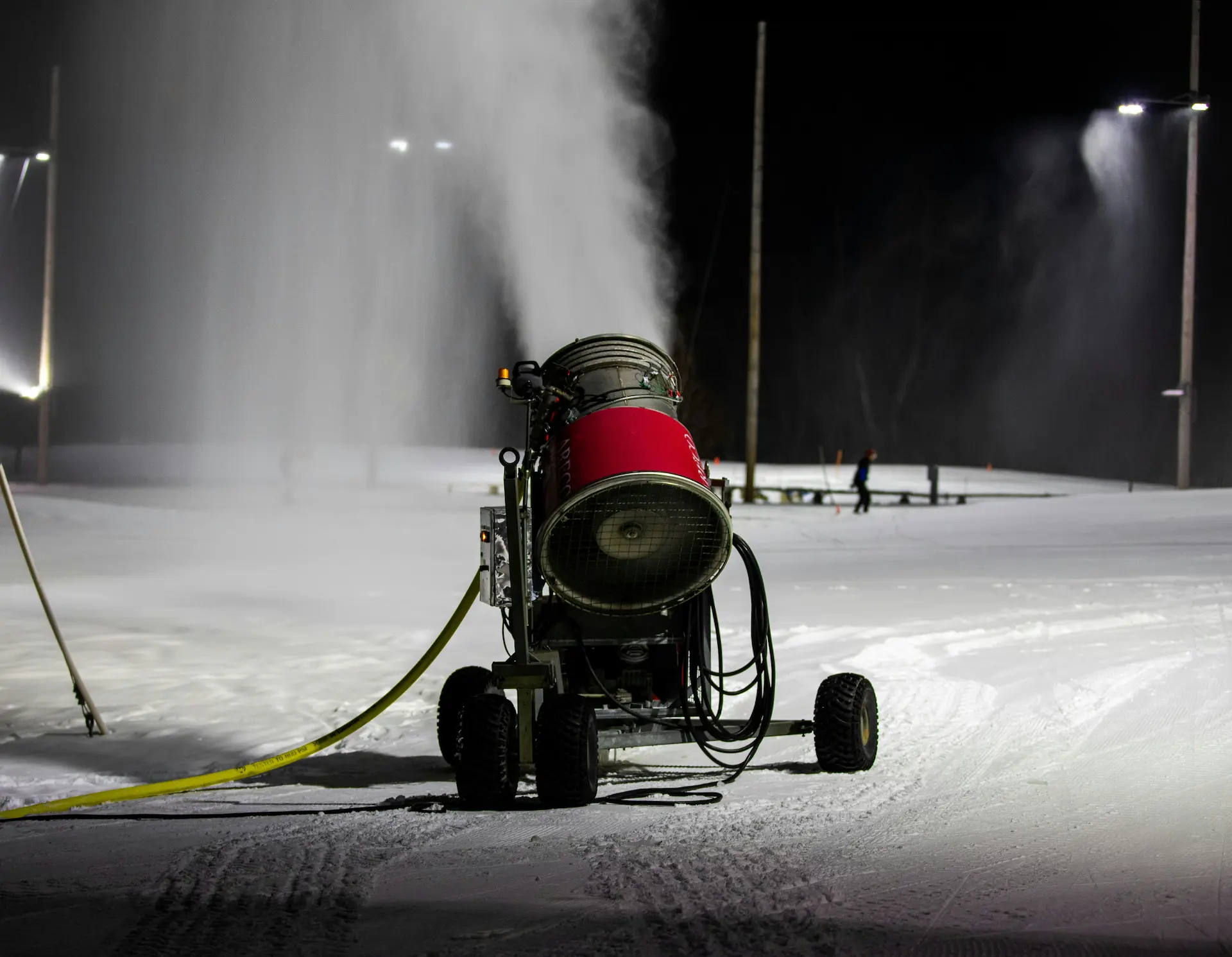
Artificial snow is created by snow- cannons, -guns or -machines, which spray a high-pressure mix of water and compressed air onto ski slopes. The process, known as atomisation, breaks the mixture into tiny droplets that freeze into snowflakes before reaching the ground.
This method requires large amounts of water and energy and only works when outdoor temperatures are cold enough. In the past, additives like the antibacterial protein Snowmax (banned in 2018) allowed snow production even above freezing. Today, most ski resorts no longer permit additives, so artificial snow is made purely from water and air.
Water consumption
How much water are we talking about? A snowmaker consumes – depending on the type – about 405 litres of water per minute. That is comparable to 40 household taps fully open. To give you an idea: 3 to 4 million litres of water are needed to cover just one hectare of slope with snow.
The exact consumption per resort depends on the altitude, width of the slopes and the weather, but the quantities are substantial. According to an article from 2018, the ski resort Kitzbühel converted 1,2 billion litres of water into artificial snow annually. In France, the amount of water needed for the production of artificial snow in one season was comparable to that of a city with 170,000 inhabitants (comparable to the city of Arnhem).
Effects on the ecosystem
At first glance, you might think artificial snow sprayed onto the slopes simply melts in the spring and flows harmlessly back into nature. Unfortunately, the reality is different. The massive volumes of water used by ski resorts are drawn directly from the surrounding environment, severely disrupting the natural water cycle.
Here’s how it works: water for snow making machines is either pumped from rivers or sourced from specially constructed reservoirs, which store water in spring an summer to be converted into artificial snow in winter. Under natural conditions, rain and meltwater would trickle down vegetated mountain slopes, gradually seeping into the soil—a process vital for mountain biodiversity. But ski slopes are cleared of trees and vegetation, leaving the soil exposed. When (artificial) snow melts in the spring, it no longer gets absorbed by the soil. Instead, it rushes directly and rapidly down to the valley.
The problem doesn’t stop there. Artificial snow also differs structurally from natural snow. While a natural snowflake is made up of delicate, six-branched crystals, artificial snowflakes are dense and compact. This density means they exert greater pressure on the soil and melt more slowly, disrupting soil life and hindering the regrowth of grasses and plants.
The depletion of natural water reserves leads to increased drought in ski areas. This disruption to the water cycle compounds the drought already affecting many mountain regions due to climate change.
Energy consumption
The energy consumption of snowmaking machines is a complex issue. While modern snowguns are far more efficient than older models, their impact depends energy. Annual estimates also fluctuate due to changing weather conditions and the varying yearly demand for artificial snow. However, recent research provides a clearer picture of the average energy consumption of snowmaking.
A study by researchers from the University of Bern analysed water and energy use in Austrian ski resorts, collecting data from 2023 and 2024. Their findings? 281 GWh of energy is required per season to produce artificial snow in Austria’s ski resorts. Per skier visit, this translates to 5.3 kWh—comparable to running a single washing machine cycle.
Per hectare of snow-covered slope, the energy consumption rises to 22,449 kWh. To put this into perspective, this represents 0.46% of Austria’s total annual energy consumption (61,080 GWh).
Energy use always comes with a cost: unless generated sustainably, it results in CO₂ emissions. Austrian snow machines alone contribute 2,831 tonnes of CO₂ per year. While earlier studies estimated snow production consumed between 350 and 900 GWh, this latest research reveals significantly lower consumption.
There’s room for improvement. The researchers emphasise that emissions and energy use could drop dramatically if ski resorts shifted to greener energy sources. Yet, even with these advancements, other environmental impacts—like high water consumption and ecological burden —remain big challenges.
Conclusion: the future of artificial snow and sustainable choices
Despite growing awareness of the environmental impact of artificial snow and the development of more efficient snow machines, demand for artificial snow is set to rise. In Austria alone, an increase of between +62% and +105% is expected, depending on the climate scenario. Water and energy demand will grow in tandem.
So, what can we do to change course? One option is to only ski when natural snow is available or choose alternative holidays if conditions are poor. But of course it is not that easy. Ski resorts are economically dependent on tourism—hotels, restaurants, and ski lifts provide jobs and income. Many regions will do whatever it takes to survive, continuing to rely on artificial snow.
Yet, some areas are adapting. By offering alternative activities—such as hiking, rafting, climbing, and other mountain sports—when snow is scarce, they diversify the local economy, reduce dependency on a single sector, and protect fragile mountain ecosystems.
As a consumer, you have influence. Look into your ski resort’s sustainability policies: Do they have a climate strategy? What measures are they taking to reduce environmental harm, and are there sustainable alternatives available? Also, consider how you travel to your destination. Flying, driving with friends, or taking a bus can make a huge difference in CO₂ emissions—often far more than you’d expect. But that’s a topic for the next article.