In short
- A dated, honest partial answer scores better than a blank field or a guess.
- Most questionnaires want method and boundary as much as they want a number.
- Answer once into a maintained inventory and the next twenty become an export.
What has gone wrong is a timing mismatch, not a competence problem. Your customer has a scope 3 obligation with a deadline, and your emissions are one line in their supply chain total. This week, do four things: ask the buyer for the deadline and the format, split the questions into ones you can answer today and ones you cannot, answer scope 1 and 2 first, and reply with dated, clearly caveated partial answers rather than blanks or guesses. What stops it recurring is holding a maintained inventory instead of reconstructing one per request, because the next customer will ask the same questions in a different template.
Nobody has ever answered their first supplier questionnaire comfortably. The useful goal is not a perfect response. It is a credible one, on time, that you can improve next year.
Why are you getting this now?
Because your customer's scope 3 is your scope 1 and 2.
Large buyers under CSRD, under a science-based target, or inside an EcoVadis or NHS Evergreen assessment cannot report their own value chain emissions without supplier data. The obligation lands on them, and the questionnaire is how it travels down. It is not a judgement about you.
That also explains why the questions feel oddly specific. They are not trying to score your sustainability. They are trying to fill a cell in their own model, and a number without a boundary is useless for that purpose. Our note on value chain ESG questions covers the pattern in more detail.
What is the questionnaire actually asking for?
Most of them contain four kinds of question wearing different clothes.
A number. Total emissions, usually split by scope, for a stated period.
A boundary. Which legal entities, which sites, which period, and what was excluded.
A method. Which standard, which factor source, spend-based or activity-based, and whether anything was estimated.
A direction of travel. A target, a reduction plan, or a base year.
The second and third categories are where most first-time responders lose points, and they are also the cheapest to answer well, because they require documentation rather than data.
What do you do this week?
Four steps, in order, and none of them requires a finished footprint.
Ask the buyer two questions. When is the deadline, and is a partial response acceptable? Buyers routinely accept partial data from smaller suppliers in the first cycle, and almost nobody asks. Ask in writing so you have the answer on record.
Sort the questions into three piles. Answerable today from existing records. Answerable within a month with effort. Not answerable this year. Most companies find the first pile is larger than they feared, because energy, fuel and fleet data usually exists somewhere in finance.
Answer scope 1 and 2 first. These come from utility bills, fuel cards and fleet records. They are the questions your customer needs most, because they are the part of your footprint that lands directly in their total.
Write the caveats into the answer. State the period, the entities included, the method used and which lines are estimated. A number with those four attached is usable. A number without them may be discarded even if it is accurate.
How do you answer a question you have no data for?
Not with a blank, and not with a guess presented as a figure.
| Situation | Weak answer | Credible answer |
|---|---|---|
| No scope 3 data | Leave blank | "Not yet calculated. Screening planned for FY27, categories 1 and 4 first." |
| Estimated figure | Give the number alone | "Estimated, spend-based, FY26, excludes leased sites." |
| No target set | "N/A" | "No formal target yet. Base year being established in FY26." |
| Only group data | Give the group number | "Group figure. Our entity is approximately X percent of group revenue." |
| Data exists but unverified | Claim assurance | "Internally prepared, not externally assured." |
The pattern is the same in every row: say what you have, say what it covers, say what it does not, and give a date. Assessors are used to gaps and are far less tolerant of unexplained numbers than of missing ones.
One warning. Do not round upward into a claim. Saying you are low carbon, climate neutral or better than your sector without substantiation creates an environmental claims problem of its own, and the rules on substantiating claims apply to a questionnaire answer as much as to a website.
What stops it happening again?
Three changes, in ascending order of effort.
Keep a standing answer file. Boundary, entities, period, method, factor source, current figures, current gaps, last updated date. Most questionnaires are the same twenty questions in a different order, and a maintained answer file turns a week of work into an afternoon.
Build the inventory once, properly. The reason the first questionnaire hurts is that you are collecting data and answering a form at the same time. Separate those. Build a real inventory on your own timetable and the form becomes a lookup. Our guide to building a footprint from scratch sets out the order to do it in.
Name an owner and a refresh date. Questionnaires arrive at random. An inventory refreshed on a fixed annual cycle absorbs them without drama; one refreshed only when asked never catches up.
If your customers are small and mid-sized companies themselves, the VSME standard is worth reading, because it is designed to be the proportionate answer to exactly this request and increasingly buyers will accept it as the format.
Does answering well actually win you anything?
Sometimes, and it is worth being unromantic about it.
The first questionnaire is usually a compliance ask. But procurement teams keep the responses, and by the second or third cycle the data starts to influence supplier scoring, shortlist decisions and framework renewals. Suppliers who answer with a method and a trajectory get treated as low risk; suppliers who answer with a blank get chased or replaced.
That is the realistic benefit. Not a marketing story, a reduction in friction with the customers you already have.
Where does Hedgehog fit?
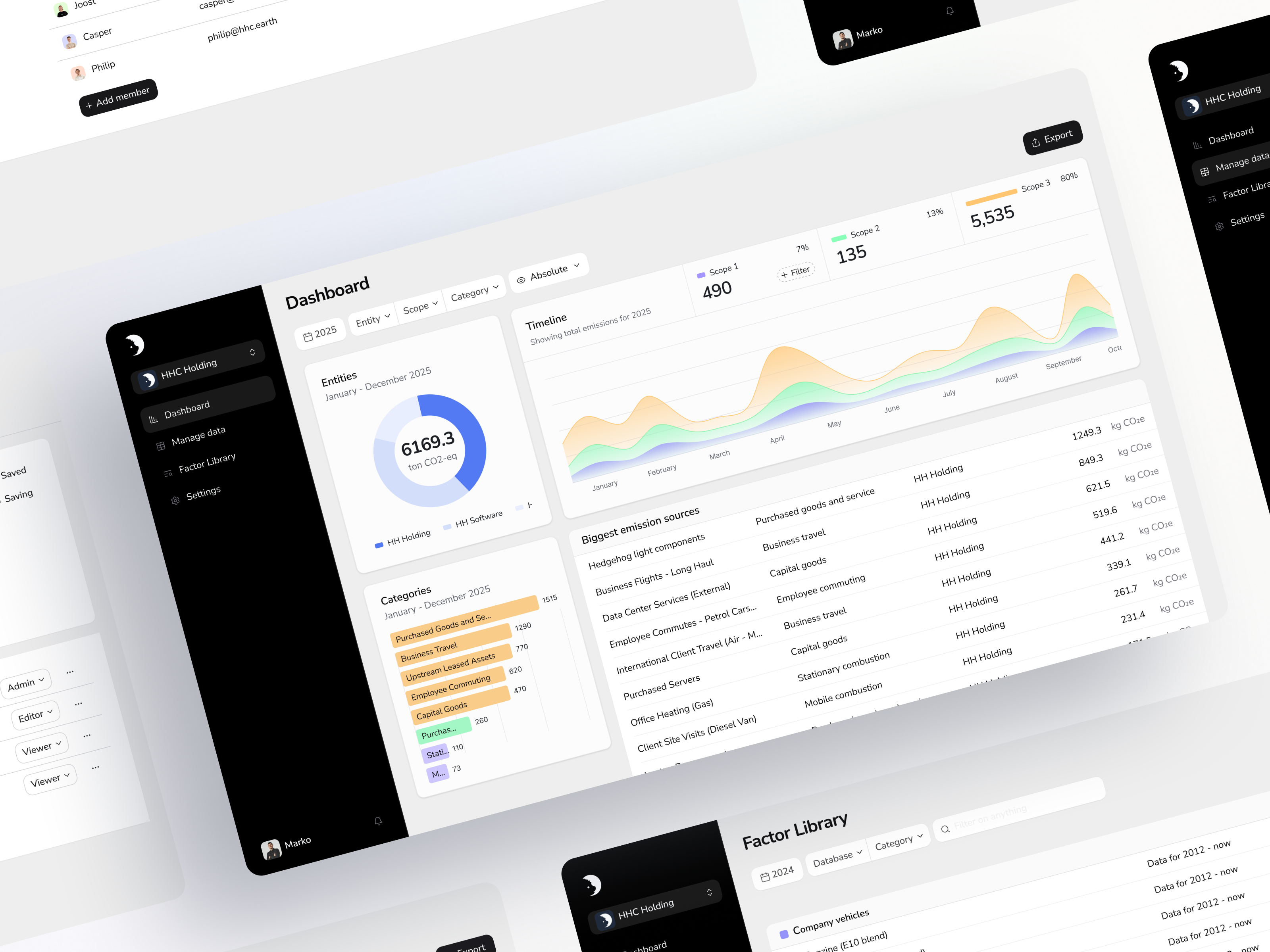
The platform is built for exactly this shape of problem: an AI assistant guides GHG protocol setup, inventory building, data upload and reporting, the factor library runs to more than 20,000 spend-based and activity-based factors with room for your own supplier-specific data, and entity management with roles for data owners, auditors and managers lets you spread data collection without spreading edit rights. Reporting covers the GHG protocol, and there are supported workflows for EcoVadis, B Corp and SBTi where a customer assessment points that way. You can open an account for free without speaking to anyone, and Pro starts at EUR 1,200 a year.
One honest caveat. A customer said on G2 in August 2026 that loading the data takes a lot of manual labour, and that once it is in, everything works perfectly, but getting it loaded is the challenging part. If your questionnaire is due on Friday, no tool fixes that. It fixes the one after.
What should you send today?
Reply to the buyer, acknowledge the request, ask for the deadline and confirm you will provide scope 1 and 2 with a stated boundary and method, plus a dated plan for the rest. That response alone puts you ahead of most of their supplier list.
Then start the inventory on your own schedule. Open a free account and build scope 1 and 2 first, or book a call if the questionnaire is tied to a contract you cannot afford to lose.
Sources: Hedgehog platform, Hedgehog on G2. Verified 27 August 2026.
Facts on this page were last verified on 2026-09-17.